Midjourney V8 Alpha: 5x Faster, Native 2K, and a Personalization System
Midjourney V8 Alpha launched March 17, 2026 with 5x faster generation, native 2K output, and improved text rendering. Here's what actually changed and what didn't.

V8 generates images roughly 5x faster than V7 — and according to early testers, that speed difference changes creative behavior more than any quality metric. When generation drops from minutes to seconds, you stop curating prompts and start iterating. The workflow is fundamentally different.
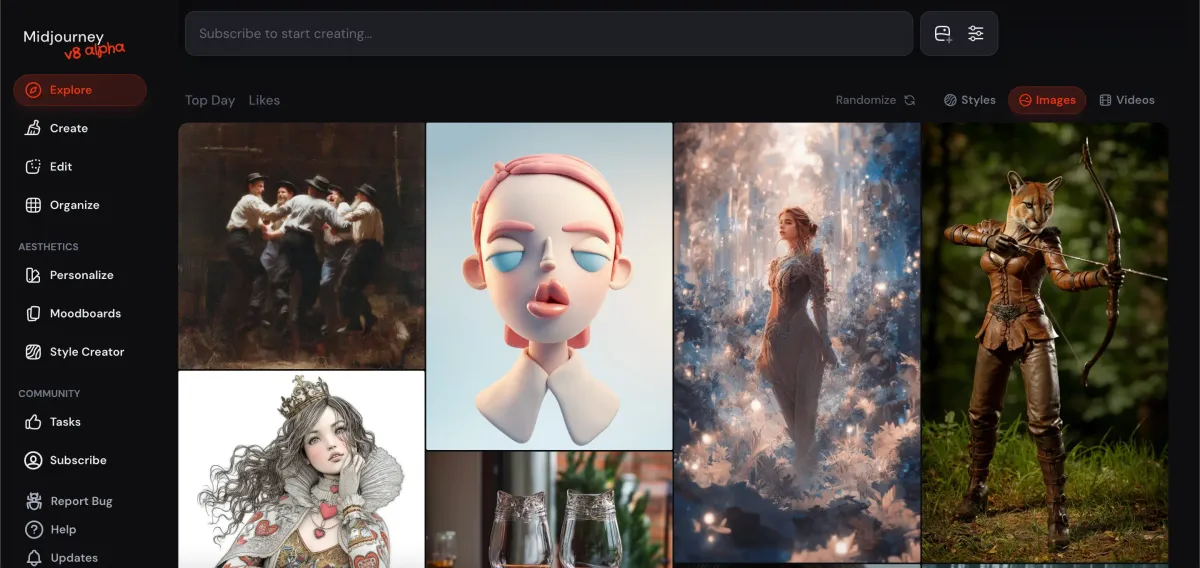
Midjourney V8 Alpha dropped on March 17, 2026, accessible exclusively at alpha.midjourney.com — not the standard midjourney.com. If you head to the wrong URL, you won't find it. That's not a minor detail; it means a significant chunk of the existing user base hasn't touched it yet.
What's Actually New
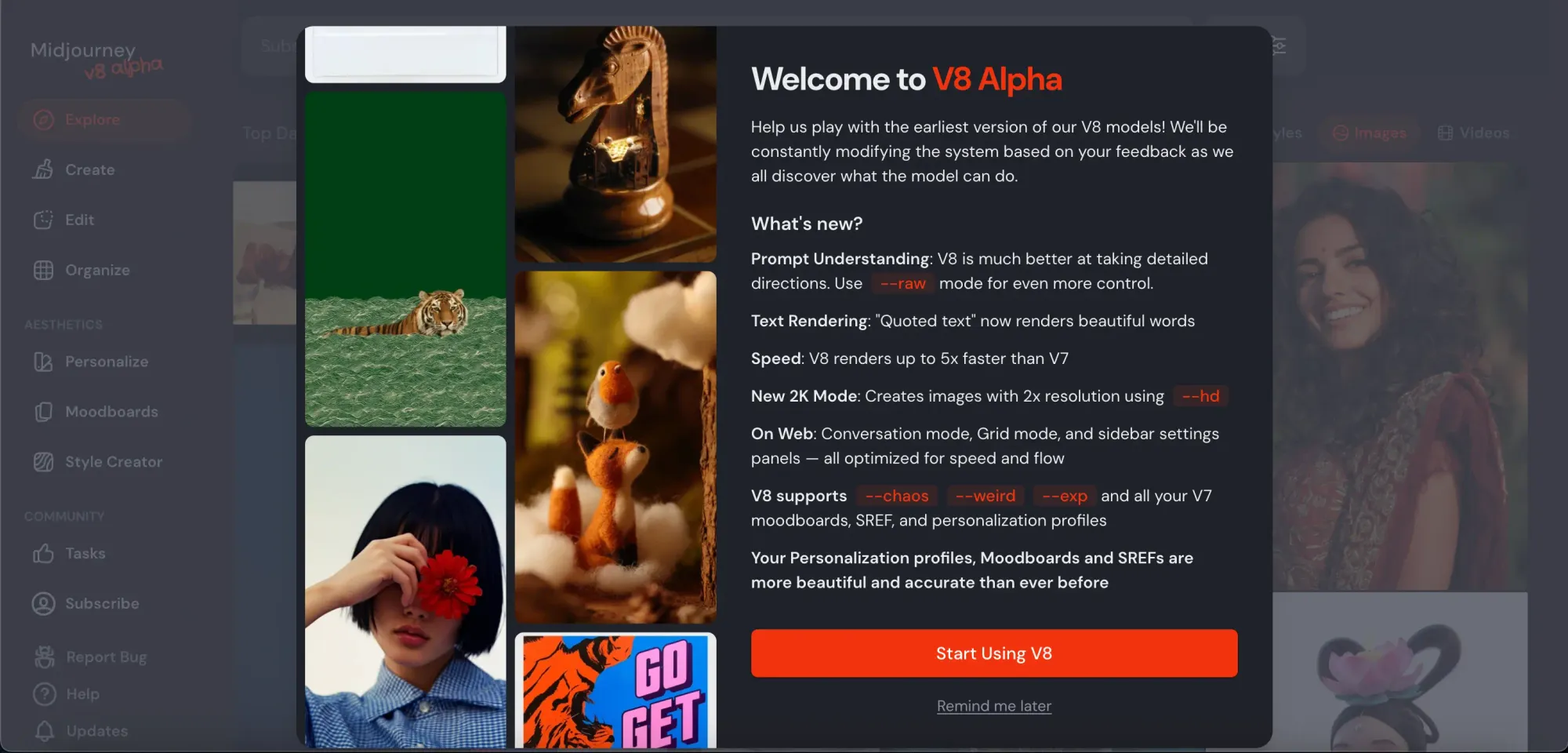
Two new parameters define V8 Alpha structurally. The --hd flag enables native 2K resolution output — the first time Midjourney has offered this natively rather than through post-generation upscaling. The --q 4 parameter is a quality multiplier designed to improve coherence on complex or detail-heavy generations.
Both come with a significant catch: --hd, --q 4, SREF, and Moodboard jobs currently run at 4x the GPU cost and 4x slower than standard generations. Relax mode — the workhorse for budget-conscious users — isn't supported yet. Midjourney says a new server cluster is in development for that.
The UI has also been restructured alongside the model. A new Grid Mode handles larger image set management, settings have moved into sidebars to stop blocking the viewport, and a new conversation mode has been added for iterative prompt refinement.
Speed Is the Real Story
The 5x speed improvement is the largest single-version speed jump in Midjourney's history. Community reception on this is unambiguous — no one is hedging on the speed. Creators who previously waited minutes per generation are reporting a fundamentally different rhythm to their sessions.
One hot take circulating in early testing puts it directly: speed matters more than any quality upgrade because it changes creative behavior, not just efficiency. Generate 5x more images and you explore 5x more ideas. The quality bar for individual outputs matters less when iteration is near-instant.
That framing is worth sitting with. Most of the V8 discussion centers on quality comparisons with V7 — but the speed delta may have the larger practical impact on how people actually work.
Personalization: The Model's Core Bet
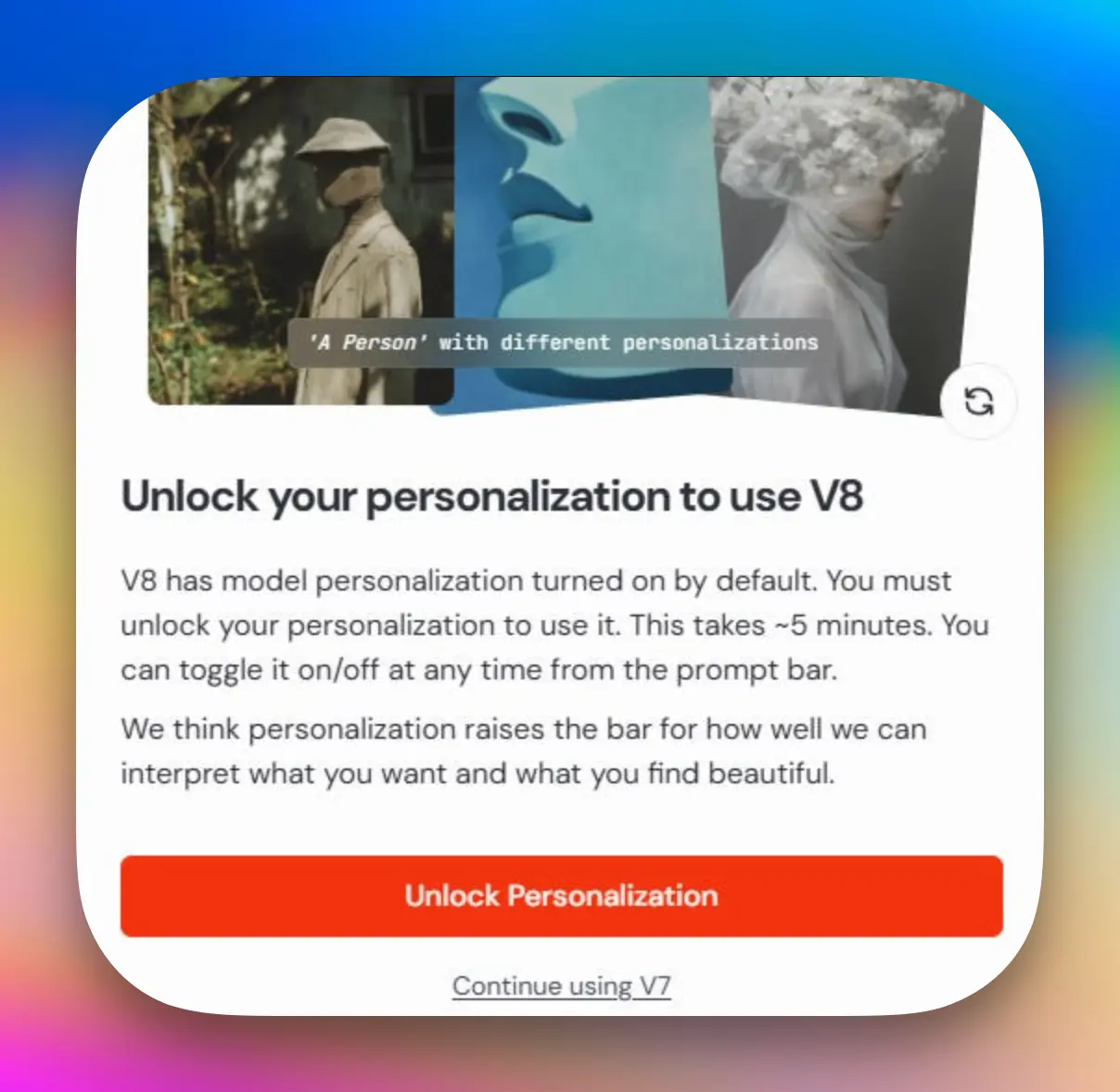
V8 leans harder into personalization than V7 did. Midjourney's official recommendation is to crank --stylize to 1000 and build out your personalization profile before serious use. The model will prompt you to set one up during early generations — ignoring that prompt means generating below the model's intended capability.
If you already have a V7 global personalization profile, it carries over as a combined V7/V8 profile. You upgrade it to a full V8 profile by rating additional images through the scrolling interface — reportedly a quick process, confirmed within minutes.
This design decision cuts both ways. The model is explicitly optimized around individual aesthetic preference, which means new users without an established profile are at a real disadvantage. V8 without a personalization profile underperforms its own potential. That's an unusual prerequisite for an Alpha release.
There's also a harder critique: some creators are questioning whether a model this tuned to individual preferences becomes an aesthetic echo chamber. If V8 learns what you like and consistently delivers it, you may stop encountering the unexpected results that push creative work in new directions. Whether that's a feature or a limitation depends on what you're using Midjourney for.
Text Rendering: Better, But Ideogram Still Wins
Text rendering has been Midjourney's persistent weak point across every version cycle. V8 Alpha shows genuine improvement. The recommended technique is placing target text inside quotes within the prompt, and early tests show longer strings coming through legibly in many cases.
First-look testing from Geeky Curiosity confirmed text rendering on simple prompts — a cat carrying a signboard reading "Midjourney V8 Alpha" came through clean. A fashion editorial prompt with signboard text also worked. But the same tester flagged that consistency isn't there yet: "sometimes it nails the text, sometimes it doesn't."
The community pattern here is familiar. Every Midjourney version has arrived with "text rendering is improved" as a headline feature. Every version has fallen short of Ideogram's accuracy. V8 Alpha closes the gap, but community testers are explicitly noting that claims of parity are premature. If reliable, pixel-perfect text in images is your primary use case, Ideogram is still the right tool.
V7 vs V8: The Quality Story Is Unresolved
This is where the Alpha status matters most. Side-by-side V7 vs V8 comparisons — voted on publicly through Midjourney's own platform — show that V8 doesn't universally outperform V7 across all styles. That's an unusual transparency move for a pre-launch release, and it's generating real discussion.
Community member @miilesus shared direct V7 vs V8 comparisons using Midjourney's own voting interface:
Midjourney V7 vs V8 ⛵️
— Melis✨ (@miilesus) February 21, 2026
V8 launch is very close and the results can be voted on via @midjourney I compared the images there with the current version. pic.twitter.com/5PS80sMH5t
Some creators are emotionally attached to V7's aesthetic signature — there's a real undercurrent of anxiety that V8 might look "different" rather than "better." That's not irrational. V7 was polarizing when it launched too, initially appearing to produce blander results before users understood how to prompt for it. V8 may follow the same learning curve.
David Holz called V8 "essentially launch-ready" during office hours on March 4 — nearly two weeks before the Alpha actually dropped on March 17. The gap between "launch-ready" and actual Alpha release, combined with the still-evolving quality story, suggests this is a genuine community testing phase rather than a soft launch with marketing polish.
The 4x Pricing Multiplier Problem
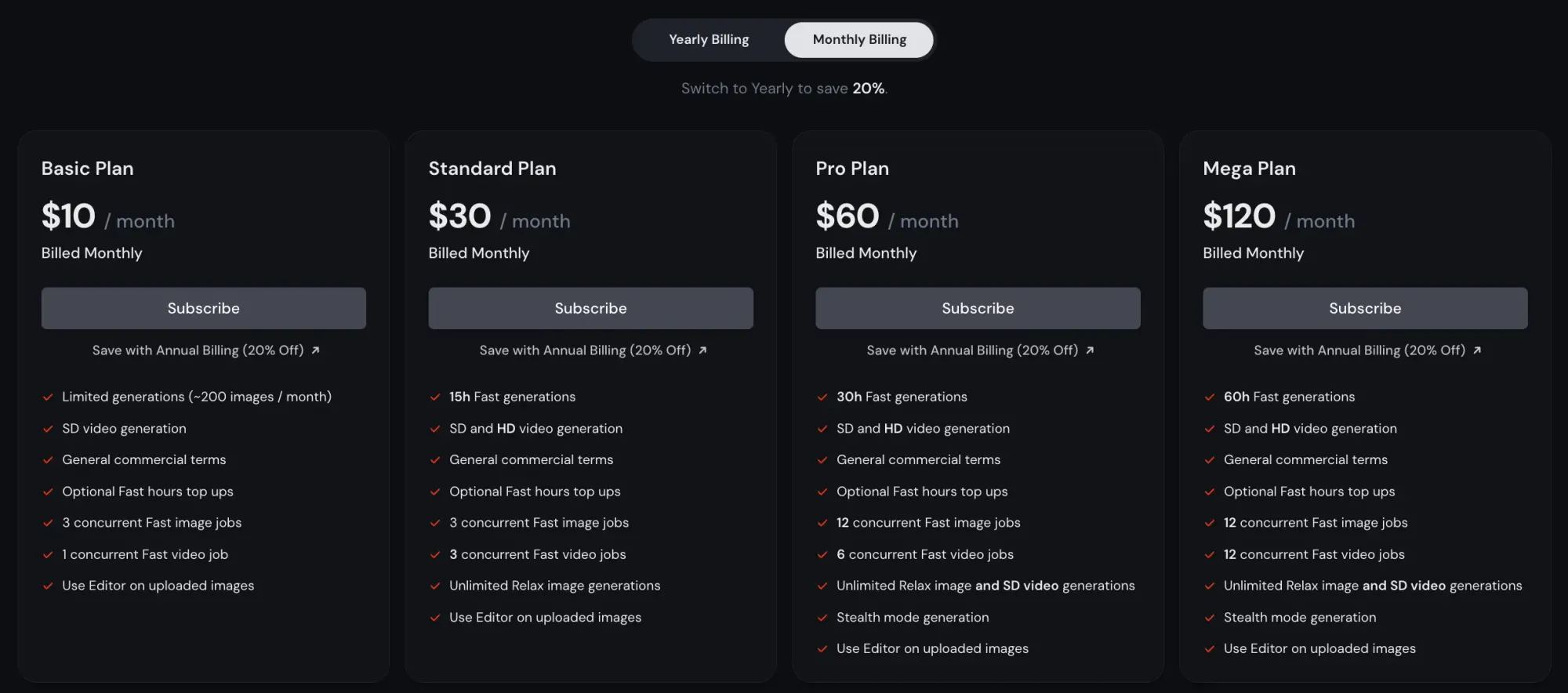
The most concrete friction in early community testing isn't the model quality — it's the cost structure. Premium features (--hd, --q 4, SREF, Moodboard) running at 4x standard GPU cost means that V8 at its best is substantially more expensive than V7 at its best.
For users on Basic or Standard plans with limited fast GPU hours, this isn't an inconvenience — it's a barrier. The model that promises the most requires the most to use at full capability. Combined with no Relax mode support, budget-conscious creators are effectively locked out of the features that differentiate V8 from V7.
This is the clearest reason to wait for the stable release if you're not on a Mega or Enterprise plan. The Alpha is worth testing for speed and exploring the new parameters — but burning 4x GPU cost on HD generations during a testing phase is a real trade-off.
Who Gets the Most From This Right Now
The clearest beneficiaries of V8 Alpha are existing Midjourney power users with established personalization profiles and enough fast GPU hours to absorb the 4x cost on premium parameters. They get the speed improvement immediately, they have the profile foundation the model needs, and they can meaningfully evaluate --hd output without burning through their monthly allocation in a session.
New users, budget-conscious creators, and anyone whose primary workflow depends on Relax mode should wait. Not because V8 is bad — the speed and text improvements are real — but because V8 Alpha without a personalization profile and with no Relax mode support is a constrained version of what the model is designed to be.
The stable release will likely arrive with Relax mode restored and the 4x cost penalty reduced or removed for certain tiers — and that's the version that will settle the V7 quality debate for good.