Nvidia NemoClaw: The Open-Source AI Agent Platform Built for Enterprises
Nvidia is launching NemoClaw, an open-source AI agent platform for enterprises. Here's what it is, how it works, and why it matters in 2026.

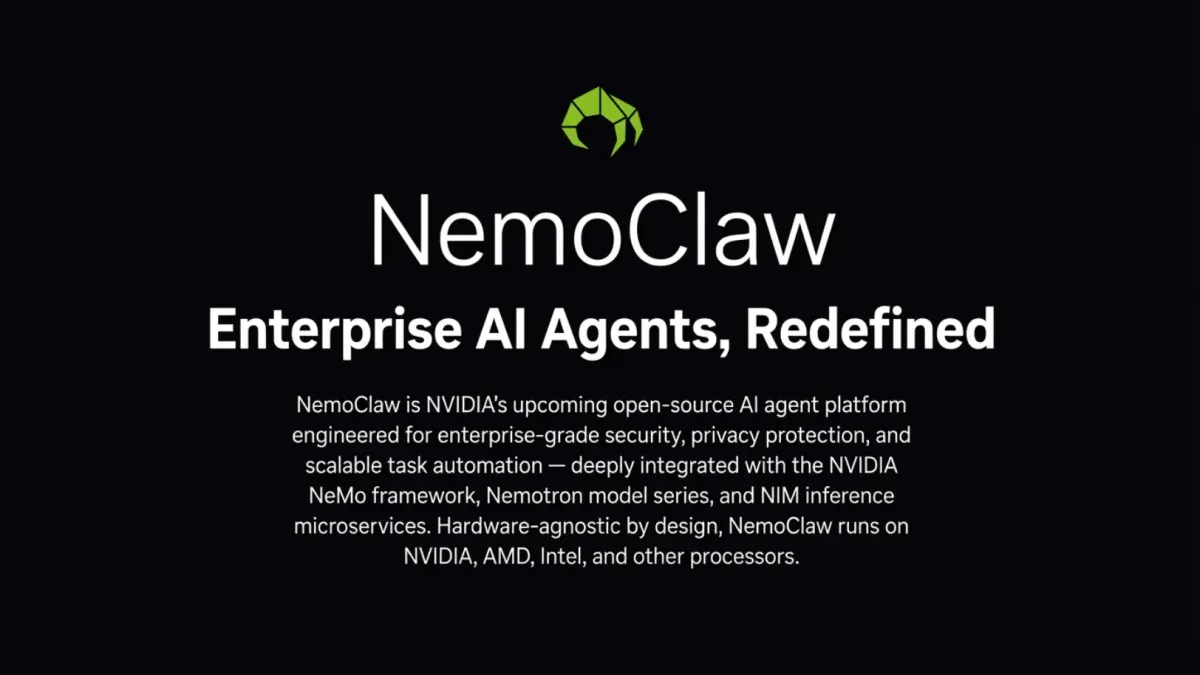
- Nvidia is planning to launch NemoClaw, an open-source platform that lets businesses deploy AI agents across their entire workforce.
- NemoClaw is not a chatbot — it's an AI agent that takes actions, runs workflows, and makes decisions autonomously.
- Nvidia has reportedly been pitching NemoClaw to major companies including Salesforce, Cisco, Google, Adobe, and CrowdStrike.
- The platform is expected to include built-in security and privacy tools and is designed to work even on non-Nvidia hardware.
- A formal reveal is expected at GTC 2026 in San Jose, with Jensen Huang set to keynote starting March 16, 2026.
What Is Nvidia NemoClaw?
Nvidia — the company behind the GPUs that power nearly every major AI system on the planet — is reportedly preparing to launch something that goes well beyond chips.
According to a report first published by Wired, Nvidia is planning to release an open-source AI agent platform called NemoClaw. The platform is built specifically for businesses that want to deploy AI agents — not just AI chatbots — across their teams at scale.
The news broke on March 9, 2026, and has been spreading fast across the tech world. Here's everything confirmed so far.
BREAKING: Nvidia, $NVDA, is planning to launch an open-source AI agent platform called NemoClaw, allowing enterprises to deploy AI agents for their workforces, per WIRED.
— unusual_whales (@unusual_whales) March 10, 2026
Chatbot vs. AI Agent — What's the Difference?
This distinction is important, and it's what makes NemoClaw different from tools most people are used to.
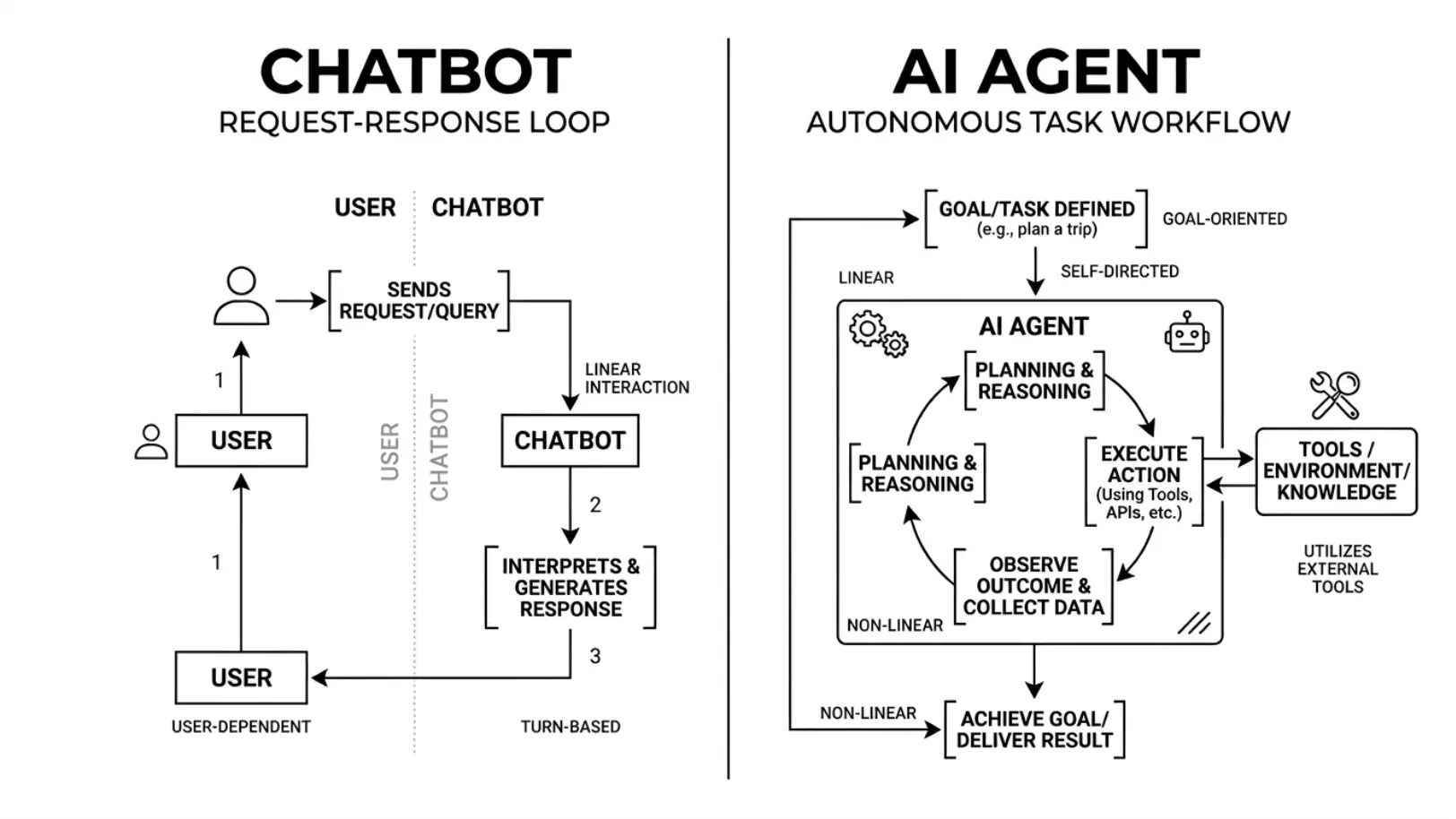
A chatbot waits for you to ask a question, then answers it. That's the full loop. An AI agent — think of it like a digital employee — actually does things. It can run workflows, talk to other software, trigger other agents, and make decisions on its own without someone typing commands at every step.
You give it a goal. It figures out how to get there.
NemoClaw is being built to let businesses deploy those kinds of agents across their entire workforce — not one demo agent, but a full operating system of AI workers running inside a company.
Who Is Nvidia Targeting With NemoClaw?
This is not a consumer product. Nvidia has been pitching NemoClaw directly to large enterprise software companies — the kind whose tools already run inside most corporate offices.
According to reports, the companies Nvidia has reportedly approached include Salesforce, Cisco, Google, Adobe, and CrowdStrike.
If those partnerships solidify, NemoClaw agents could end up embedded inside the CRM software your sales team uses, the security tools your IT team depends on, or the creative suite your designers work in every day.
Why Open Source? Nvidia's Bigger Play
At first glance, it seems strange. Nvidia dominates the hardware market — why make powerful software free?
The answer lies in Nvidia's own history. Years ago, the company released CUDA — a software layer that made it far easier for developers to use Nvidia GPUs. Once developers built their systems on CUDA, switching away became very difficult. Entire workflows grew up around that ecosystem.
NemoClaw looks like the same move, played at a higher level. Make the platform widely available, get businesses building on it, and eventually the software becomes the foundation that everyone depends on. At that point, Nvidia is no longer just selling machines — it's embedded in the workflow itself.
Critically, reports indicate that NemoClaw is expected to function regardless of whether a company runs Nvidia hardware. It can reportedly run on AMD or Intel chips too. That removes the biggest objection enterprises could raise — and widens adoption dramatically.
🚨Stop scrolling. Read this twice.
— Tuki (@TukiFromKL) March 10, 2026
Nvidia just stopped pretending they're a hardware company.
> They are planning to launch an AI agent platform called NemoClaw completely open-source, ready for any enterprise to deploy AI agents as their entire workforce.
> Your company spent… https://t.co/wVy0FPweHe pic.twitter.com/kTxcIWTTJg
What's Under the Hood: Neatron 3
Behind the platform, there is real engineering. The model holding center stage inside NemoClaw is reportedly Neatron 3.
According to early reports, Neatron 3 delivers:
- Up to 9x faster inference — inference means how quickly the AI processes a situation and decides what to do next
- Around 20% stronger reasoning scores for autonomous systems
Speed matters here because an AI agent has to process a situation, decide on a course of action, and execute — all in a loop. If that loop is slow, the whole system becomes impractical for real business use.
Security and Privacy Built In
One of the biggest concerns businesses have raised about early open-source AI agent frameworks is the risk of data exposure — agents that accidentally leak sensitive information or behave unpredictably.
According to Dataconomy, NemoClaw is expected to include integrated security and privacy layers specifically designed to address these concerns — including protections against so-called "rogue" AI behavior, where an agent takes actions outside its intended scope.
This is a meaningful differentiator if it holds up, particularly for regulated industries like finance, healthcare, and legal.
When Will NemoClaw Launch?
The timing is deliberate. Nvidia is expected to make the official NemoClaw announcement at GTC 2026, its annual developer conference, taking place in San Jose starting March 16, 2026.
GTC is traditionally where Nvidia sets the tone for the year ahead in hardware and software strategy. Jensen Huang is expected to keynote. Announcing NemoClaw in the days before the conference — letting the news circulate before the doors open — shapes the conversation before competitors can respond.
According to early timelines, the rough roadmap reportedly looks like this:
- March 2026: NemoClaw announced at GTC 2026, early access for enterprise partners begins
- Q2–Q3 2026: First third-party tools begin integrating NemoClaw-style agent features into existing workflow platforms
- Q4 2026–Q1 2027: Broader enterprise rollout as adoption widens
The Reaction Online
The announcement has generated strong reactions — particularly around what AI agents at enterprise scale could mean for jobs and competition.
While the entire world was watching Iran, NVIDIA quietly dropped the biggest bomb of 2026. Not a missile. Not a drone. Something worse.
— Dr. JiHoon Park | IQ 312 (@Jihooncrypto) March 10, 2026
NemoClaw → an open-source AI agent platform. Free. For everyone. Effective immediately.
That means ANY company on Earth can now deploy AI…
Some of the more dramatic predictions circulating online should be taken with appropriate skepticism — the platform hasn't launched yet, and real-world enterprise adoption rarely moves as fast as social media suggests.
What is worth noting: the competitive pressure on paid AI platforms is real. A free, open-source agent framework backed by Nvidia's infrastructure changes the cost equation for any company currently paying for enterprise AI services.
FAQ
What is Nvidia NemoClaw?
NemoClaw is a planned open-source platform from Nvidia that allows businesses to deploy AI agents — autonomous software workers that take actions and run workflows — across their organizations. It was first reported by Wired on March 9, 2026.
Is NemoClaw available now?
As of March 11, 2026, NemoClaw has not officially launched. An announcement is expected at GTC 2026 in San Jose, starting March 16, 2026. Early access for enterprise partners is reportedly beginning around that time.
Does NemoClaw only work on Nvidia hardware?
According to reports, no. NemoClaw is expected to function on hardware from other chip makers including AMD and Intel, which is part of what makes it an attractive option for a wide range of enterprises.
How is NemoClaw different from ChatGPT or Claude?
ChatGPT and Claude are chatbots — you ask, they answer. NemoClaw is an agent platform — it's designed to take actions, run workflows, and make decisions autonomously without requiring a human to drive every step. It's also open-source and aimed at enterprise deployment rather than individual users.
What companies is Nvidia partnering with for NemoClaw?
Nvidia has reportedly been in discussions with Salesforce, Cisco, Google, Adobe, and CrowdStrike about potential NemoClaw partnerships, according to multiple reports citing people familiar with the plans.
Bottom Line
NemoClaw represents a meaningful strategic shift for Nvidia. For nearly a decade, the company's dominance came from selling the best hardware. But hardware can be competed with. The harder thing to displace is the software platform that a company's entire operation is built on — which is exactly what NemoClaw is designed to become.
Whether it delivers on that ambition depends on what gets announced at GTC 2026 and how quickly enterprise adoption actually moves. For now, the pieces are clearly in motion: open-source, enterprise-focused, hardware-agnostic, and timed for maximum attention. Watch what Jensen Huang says on March 16th.