Perplexity Computer: The AI Agent That Runs 20 Models at Once
Perplexity Computer launched Feb 25, 2026. It orchestrates ~20 AI models to execute complex workflows autonomously. Here's everything it can actually do.

- Perplexity Computer launched February 25, 2026 for Max subscribers at $200/month, with enterprise availability announced March 10, 2026 at the Ask 2026 developer conference.
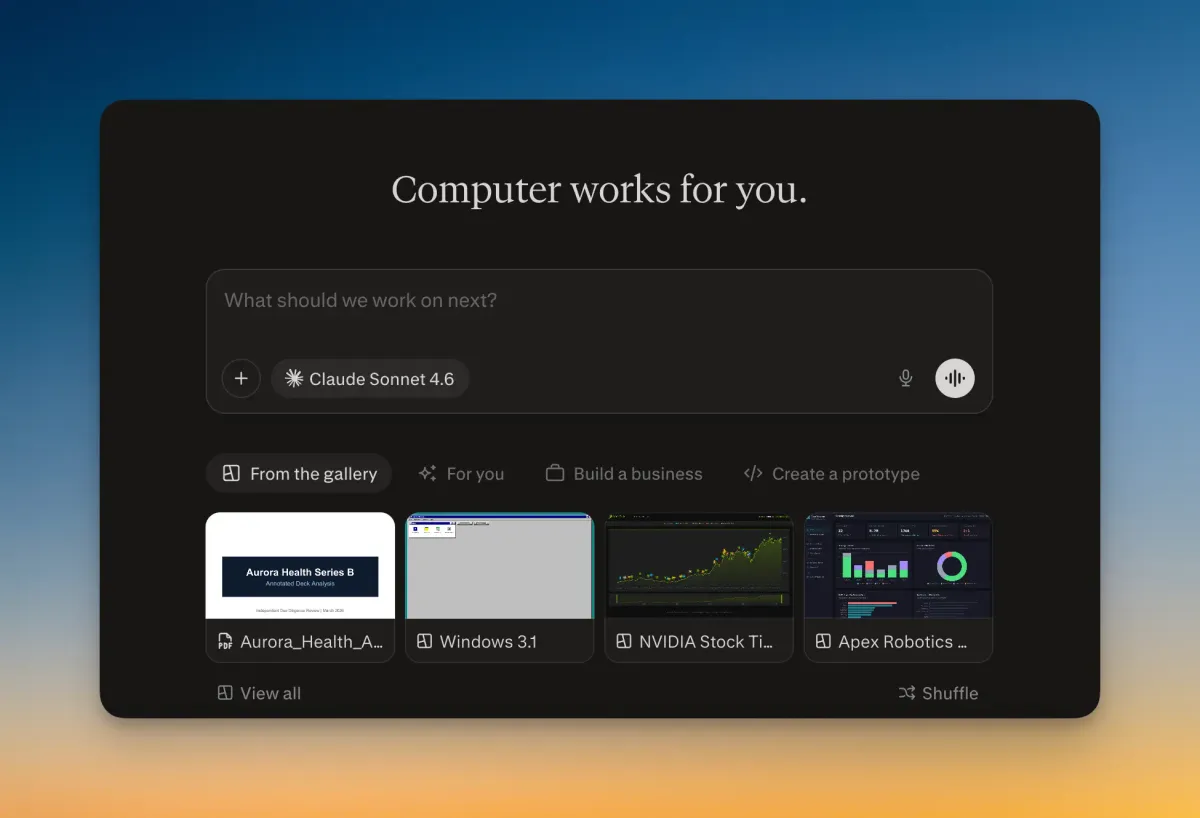
- It's not a chatbot — it's a multi-model orchestration system that routes subtasks to roughly 20 specialized AI models simultaneously, with Claude Opus 4.6 as the central brain.
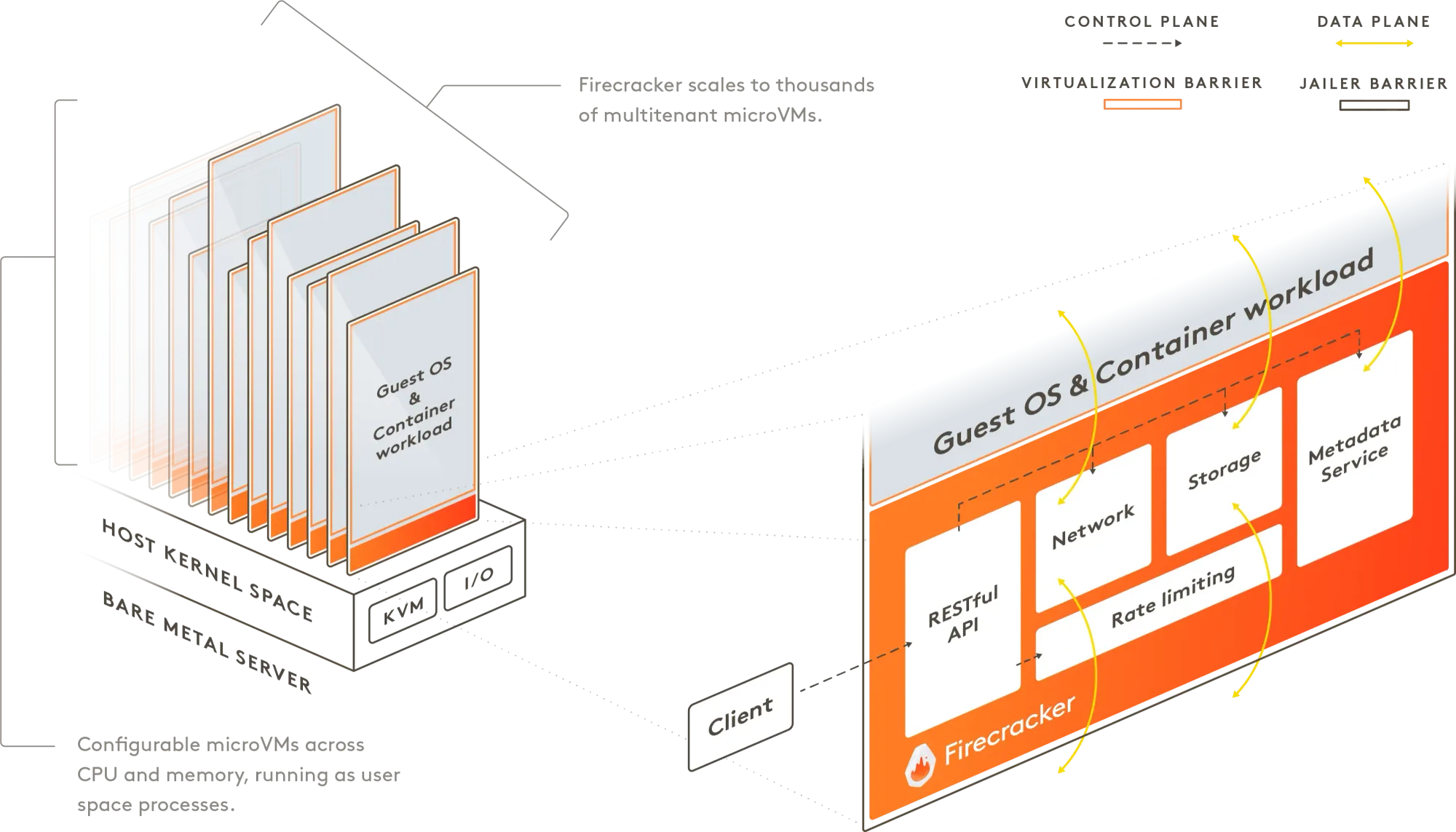
- Every session runs inside an isolated Firecracker microVM (the same security tech Amazon uses for AWS Lambda), so your data stays completely separate from other users.
- Enterprise customers get Snowflake, Salesforce, Datadog, SharePoint, and HubSpot connectors, plus SSO, audit logs, and zero data retention options.
- A new Skills feature lets developers import existing workflows from OpenAI Codex and Anthropic Claude Code directly into Computer — no rebuild required.
Announcing Personal Computer.
— Perplexity (@perplexity_ai) March 11, 2026
Personal Computer is an always on, local merge with Perplexity Computer that works for you 24/7.
It's personal, secure, and works across your files, apps, and sessions through a continuously running Mac mini. pic.twitter.com/EpvilVX6XZ
What Is Perplexity Computer, Actually?
Forget everything you know about AI chatbots for a second. Perplexity Computer is something different. It's closer to hiring a team of specialists who all work at the same time — except the team is made of AI models, and you just describe what you want done.
You type a goal. Computer breaks it into subtasks, spins up sub-agents (think of these like little worker programs) to handle each piece in parallel, and delivers finished output. Research, code, images, video, documents — all in one shot, no babysitting required. According to Perplexity's official blog, it's designed to run for hours or even months on long-horizon tasks.
It's a significant step beyond a search engine, and honestly beyond most "AI agents" that have launched so far. The core idea: no single model is best at everything, so why use just one?
How the Multi-Model Engine Actually Works
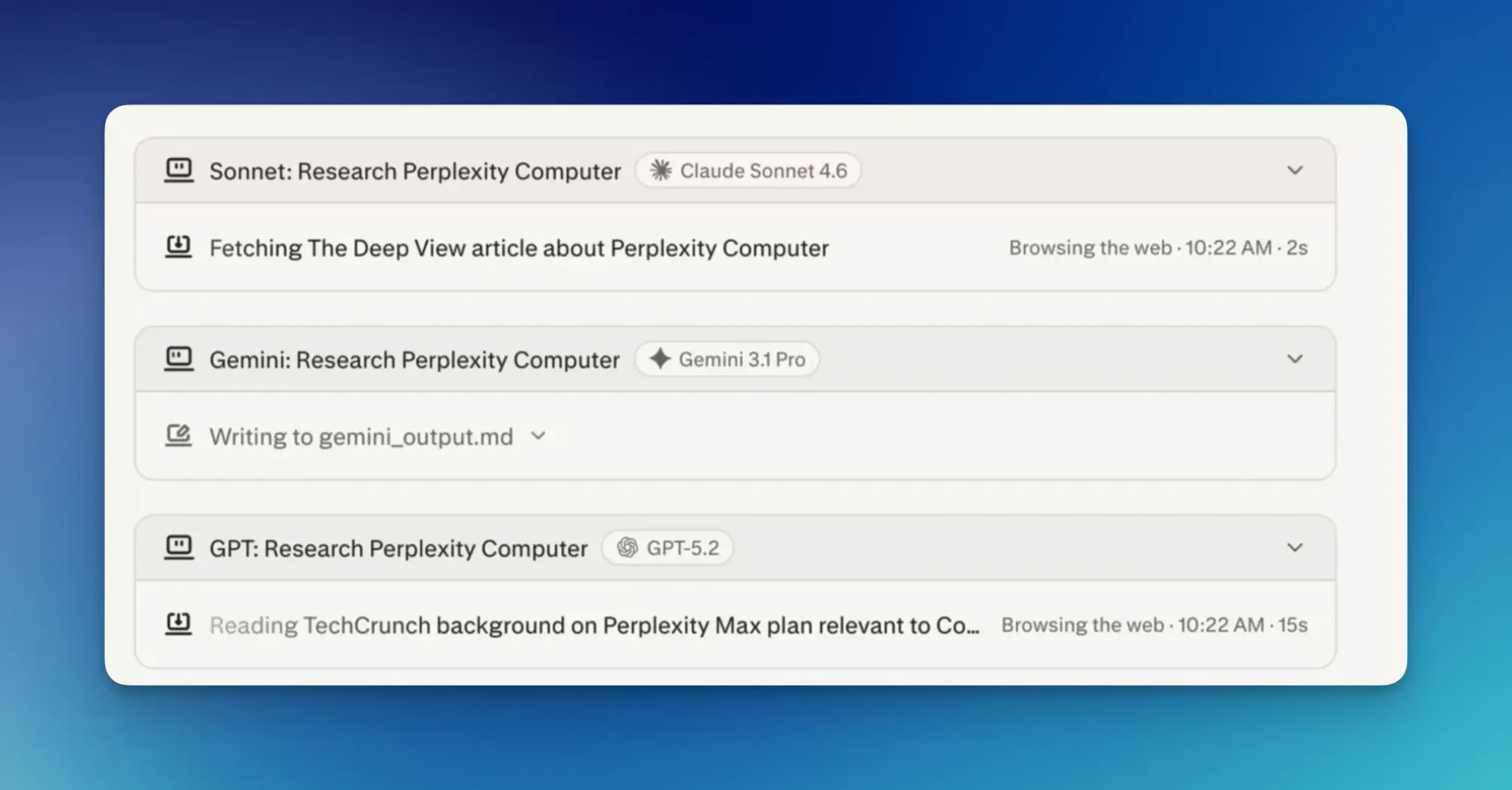
Here's where it gets genuinely interesting. Most AI tools pick one model and stick with it. Perplexity Computer treats models like tools in a toolbox — each one gets pulled out for the job it's best at.
The orchestration stack looks like this:
- Claude Opus 4.6 — the central reasoning and coordination engine. It's the manager deciding what goes where.
- Gemini — handles deep research sub-agents when a task needs serious web-digging.
- GPT-5.2 — used for long-context recall and broad web search (long-context means it can hold huge amounts of information in mind at once — like having a very good memory for a very long document).
- Grok — lightweight, fast tasks where speed matters more than depth.
- Nano Banana — image generation.
- Veo 3.1 — video generation.
There's a reported discrepancy worth flagging: the official Perplexity blog references 19 models at launch, while VentureBeat's enterprise coverage cites approximately 20. The difference likely reflects one additional connector added for the enterprise tier, but Perplexity hasn't confirmed that publicly.
What makes this worth paying attention to is an internal data point Perplexity shared: in January 2025, 90% of their queries routed to just two models. By December 2025, no single model commanded more than 25% of usage. Users are genuinely spreading workloads across models when given the choice — and Computer automates that decision entirely.
The Security Layer: Firecracker microVMs
Running powerful AI agents on your data sounds terrifying from a privacy standpoint. Perplexity's answer is Firecracker microVMs — microVM meaning a tiny, isolated virtual computer spun up just for your session (think of it like a disposable room that gets demolished after you leave, so the next person gets a completely clean one).
This is the same technology AWS uses for Lambda serverless computing — so it's battle-tested infrastructure, not something Perplexity cooked up themselves. Each Computer session runs fully isolated, which means no cross-user data access, even when thousands of people are running tasks simultaneously.
What It Can Actually Do: Real Use Cases
The demos that went viral after launch weren't subtle. People were using Computer to replicate expensive, proprietary software products from scratch.
One widely shared example: a user reportedly rebuilt POSH<GO> — a secretive luxury marketplace for private yachts, supercars, watches, and mansions — in a single prompt. Another wave of demos showed Computer generating Bloomberg Terminal-style financial dashboards. Bloomberg Terminal costs around $30,000 a year per seat.
The reaction from the startup and VC crowd was immediate.
Perplexity Computer just came for another $30,000 Bloomberg Terminal feature…
— ₕₐₘₚₜₒₙ (@hamptonism) March 3, 2026
POSH<GO>, infamously known as a secret marketplace for the ultra wealthy, was just oneshotted with Perplexity Computer…
Private Yachts, Watches, Supercars, Mansions, etc.
Data was never the moat. https://t.co/oeRTrJbm6m pic.twitter.com/5lDmMYW4tM
Beyond the dramatic demos, more everyday use cases are emerging — competitive research across multiple browser tabs simultaneously, automated lead monitoring from Reddit forums, personalized outreach email drafts saved directly to Gmail, and weekly news databases auto-populated into Notion. The Comet browser (a separate Perplexity product that preceded Computer) demonstrated many of these workflows, and Computer extends them with far more model horsepower behind the scenes.
been testing out @perplexity_ai new computer feature, it surprised me a lot!!
— Lou (@louszbd) March 1, 2026
kind of like the "app store" of the agent world
imo just unlocked 2026 level productivity ahead of time (after @openclaw ) pic.twitter.com/B31y82gDyX
Skills: Bring Your Own Workflow
One of the least-covered but most strategically significant features is Skills.
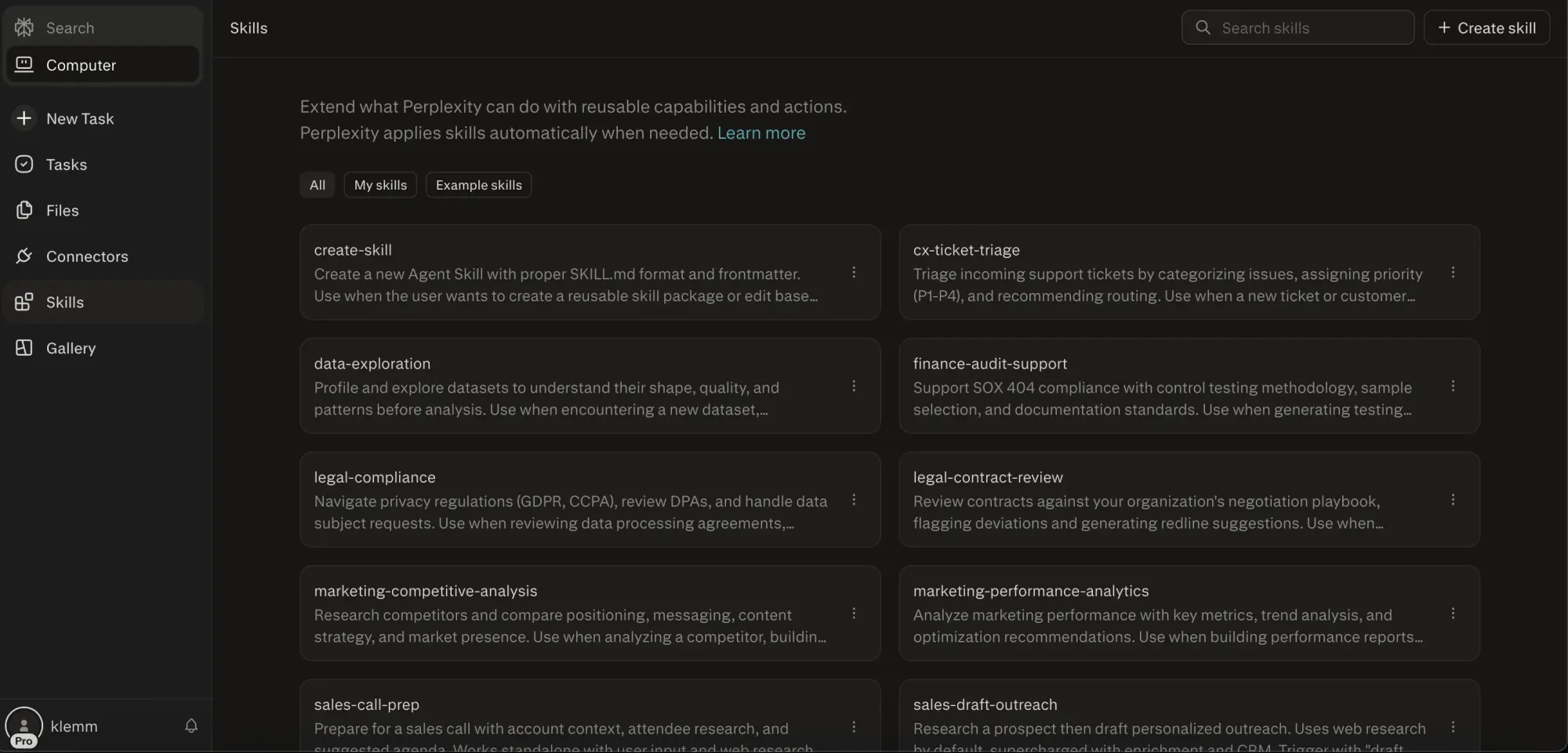
Skills are cross-platform importable workflows — basically automation programs you've already built elsewhere — that can run inside Computer. Specifically, Perplexity is rolling out support for workflows originally built in OpenAI Codex and Anthropic Claude Code.
The implication: if you've spent months building automated playbooks in another AI ecosystem, you don't have to start over. Drop them into Computer and they run on Perplexity's multi-model infrastructure. This positions Computer less as a product and more as a universal execution layer — a platform other AI work can run on top of.
Model Council Gets Smarter Inside Computer
Perplexity already had a feature called Model Council — a system for suggesting which model to use for a given task. Inside Computer, that gets upgraded: the suggestions become promptable, meaning you can directly instruct the system on model preferences rather than just accepting its recommendations.
This detail came straight from the CEO.
Model Council essentially becomes a feature of Perplexity Computer where the suggests are promptable pic.twitter.com/noussmMrP3
— Aravind Srinivas (@AravSrinivas) February 25, 2026
For power users who care about controlling which model handles which part of their workflow, this is genuinely useful — not just a marketing checkbox.
Enterprise: Where Things Get Serious
Perplexity announced Computer for Enterprise at its first-ever developer conference, Ask 2026, on March 10, 2026. The reception was intense — more than 100 enterprise customers contacted Perplexity demanding access within a single weekend of the consumer launch, according to VentureBeat.
The enterprise tier adds a meaningful layer on top of the consumer product:
- Native data connectors for Snowflake, Datadog, Salesforce, SharePoint, and HubSpot — letting teams run plain-English queries against complex corporate data warehouses without writing SQL.
- 100+ existing integrations carried over from Perplexity's existing platform.
- SSO/SAML and SCIM provisioning — standard enterprise identity management.
- Full audit logging and SOC 2 Type II certification.
- Zero data retention option for organizations with strict compliance requirements.
- Slack integration — the @computer mention in channels was born from Perplexity's own internal Slack bot, which preceded the public launch.
Perplexity's Head of Business, Dmitry Shevelenko, made the competitive positioning clear at Ask 2026, describing open-source alternatives like OpenClaw as unsuitable for enterprise environments from a security standpoint. It's worth noting that developer communities view OpenClaw more neutrally — as a solid local tool, just not enterprise-ready.
The Risk That Doesn't Get Talked About
The bullish sentiment around Computer is real and mostly warranted. But there's a structural vulnerability worth naming clearly.
Perplexity's entire multi-model value proposition depends on continued API access from Anthropic, Google, OpenAI, and xAI — all of whom are building their own competing agent products. If any of those companies restrict API access, raise prices, or deprioritize third-party orchestration, Computer's model roster shrinks and the value proposition weakens.
Perplexity's own official materials don't address this risk. It doesn't mean the product isn't impressive — it is. But enterprise buyers signing multi-year agreements should have that conversation.
Perplexity Computer vs. Comet: Don't Confuse Them
A quick clarification worth making because it's causing genuine confusion online: Comet and Computer are not the same product.
Comet is Perplexity's AI-native browser and the Comet Assistant is its browser-based AI agent — both launched prior to Computer. They're predecessors and foundations that Computer builds on top of. Computer is the new, more powerful, multi-model agent system. Different product, different tier, different capabilities.
Pricing and Access
- Perplexity Max subscribers: $200/month — Computer is included.
- Enterprise: Custom pricing, announced at Ask 2026 on March 10, 2026. Contact Perplexity directly for access.
- Official product page: perplexity.ai/hub/blog/introducing-perplexity-computer
FAQ
What is Perplexity Computer and how is it different from regular Perplexity?
Regular Perplexity is an AI-powered search tool that answers questions. Perplexity Computer is a full agent system — you give it a goal, and it autonomously plans, researches, codes, generates content, and delivers finished work using up to ~20 different AI models working in parallel. It's the difference between asking someone a question and hiring someone to complete a project.
Which AI models does Perplexity Computer use?
At launch, the confirmed models include Claude Opus 4.6 (core reasoning), Gemini (deep research), GPT-5.2 (long-context recall), Grok (fast lightweight tasks), Nano Banana (image generation), and Veo 3.1 (video generation). The full roster sits at approximately 19–20 models total, with the exact count varying slightly between the consumer and enterprise tiers.
Is Perplexity Computer safe to use with sensitive business data?
Each session runs in an isolated Firecracker microVM, meaning your data is sandboxed away from other users. Enterprise customers additionally get SOC 2 Type II certification, full audit logging, and a zero data retention option. That said, the system routes data through third-party model APIs (Anthropic, Google, OpenAI, xAI), so review each provider's data handling policies before using it with highly sensitive information.
What are Perplexity Computer Skills?
Skills are importable workflow programs — automation sequences you've already built in tools like OpenAI Codex or Anthropic Claude Code — that can run inside Computer without being rebuilt from scratch. It's designed to make Computer a universal execution layer for AI workflows, regardless of where those workflows were originally created.
Do I need to be on the $200/month plan to use Perplexity Computer?
Yes. As of launch, Perplexity Computer is exclusive to Perplexity Max subscribers at $200/month. An enterprise tier with additional connectors and governance features was announced at Ask 2026 on March 10, 2026, with pricing available directly from Perplexity.
Bottom Line
Perplexity Computer is the most credible challenge yet to the idea that one AI model is enough for serious work. The multi-model orchestration approach isn't just a marketing angle — the internal usage data (from 90% of queries hitting two models, down to no single model above 25%) shows this shift is already happening organically. Computer just automates it.
For individuals, $200/month is a serious commitment, but the productivity ceiling is genuinely higher than anything else currently available at that price point. For enterprises, the combination of enterprise-grade connectors, security isolation, and cross-platform Skills portability makes a compelling case — provided procurement teams are comfortable with the underlying API dependency on Perplexity's model partners. That's the one conversation worth having before signing anything long-term.