Superpowers: The Autonomous Development Toolkit Redefining AI-Powered Coding
Superpowers redefines AI coding with autonomous development workflows that go beyond specs. 74K GitHub stars in 2 months prove it's changing how agents code.

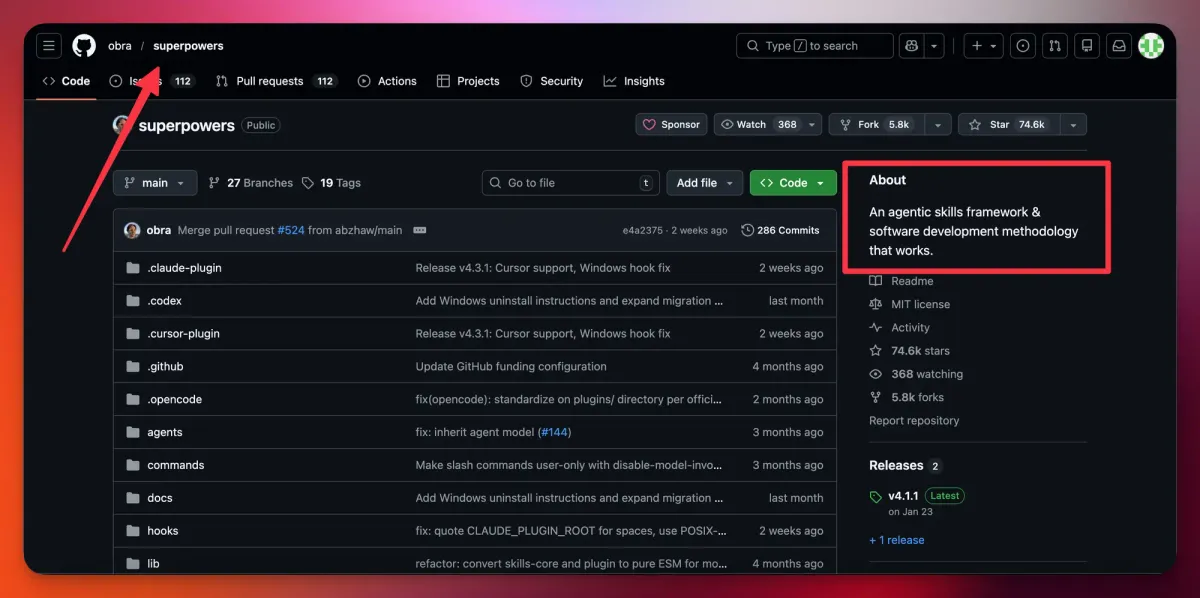
A new GitHub repository has quietly shattered conventional wisdom about how AI coding agents should work. With over 74,600 stars in just two months, Superpowers represents a fundamental shift in autonomous software development—one that moves beyond traditional spec-driven frameworks to deliver genuinely autonomous, end-to-end development workflows.
 obra
obra
The Problem with Traditional Spec-Driven Frameworks
For years, spec-driven workflows like OpenSpec and SpecKit have dominated AI coding agent design. These frameworks excel at one thing: converting vague ideas into structured specifications that prevent hallucinations. They work. They're reliable. But they're incomplete.
Here's the limitation: they stop after creating a spec. The heavy lifting—designing architecture, generating detailed implementation plans, coordinating multiple development phases, and executing autonomously—still falls on human developers or requires manual intervention.
Why AI Models Struggle Without Structure
Current AI models exhibit predictable weaknesses when left to their own devices:
- Gemini models frequently hallucinate and lack follow-through on implementation details
- Claude models sometimes make excuses when juggling multiple concurrent tasks
- Other models demonstrate laziness when forced to iterate through complex workflows
These aren't moral failings. They're architectural limitations. Without guardrails, even capable models drift.
Superpowers: A Complete Development Lifecycle
Superpowers doesn't just fix these problems—it reimagines the entire workflow. Instead of stopping at specifications, it orchestrates a full development lifecycle:
- Brainstorming – The agent asks clarifying questions to understand real intent
- Design Generation – Multiple architectural approaches are proposed with trade-offs
- Spec Creation – Detailed, executable specifications emerge from the design
- Implementation Planning – Step-by-step task breakdowns that junior engineers could follow
- Autonomous Execution – Subagent-driven development handles each task independently
- Continuous Review – Built-in inspection and validation prevent drift
The system is composable, meaning developers can use specific "skills" (brainstorming, debugging, test-driven development, collaboration) as needed. The agent triggers these automatically based on context.
Real-World Performance: Proof in Code
Command-line space invaders, vibe-coded in basically no time at all w/ Claude Code using https://t.co/8eDy4OALCZ .
— Dale Cloudman (@DaleCloudman) December 31, 2025
Made in Rust, 20k+ fps, audio, machine-gun and flamethrower powerups. Yeahhh we living in fun times. pic.twitter.com/MAy4QHF5OO
The difference becomes visceral when you compare outputs. A Rust-based Space Invaders game developed with Superpowers in Cloud Code ran at 20,000+ FPS with full audio, weapon power-ups, and sophisticated game mechanics—all autonomously generated.
The same prompt fed to Claude's chat interface with extended thinking produced functional code, but with visible lag, bugs, and lower quality output. Both used capable models. The workflow made the difference.
Similarly, futuristic landing pages generated through Superpowers featured complex shaders, 3D visuals, glass morphism effects, and interactive carousels—components most models would struggle to coordinate in a single session.
How to Get Started with Superpowers
Integration is straightforward. For Claud Code or Cursor users, installation is a plugin marketplace addition. For other agents (Codex, Kilo, OpenCode), you fetch and follow standard instructions.
The basic workflow:
- Open your coding agent and register the Superpowers marketplace
- Install the plugin directly to your instance
- In your prompt, reference the specific "superpowers" workflow you need (brainstorming, debugging, test-driven development)
- The agent automatically triggers the appropriate autonomous functions
- Review and approve each command as it executes
There's critical control baked in. You're never handing the keys entirely to the agent. You approve each significant step, maintaining oversight while gaining autonomy.
Why This Matters for Vibe Coders
"Vibe coding"—building based on feel and iteration rather than rigid planning—has long been at odds with autonomous AI. You can't "vibe" through a strict spec-driven workflow.
Superpowers changes this. By allowing continuous human feedback within an autonomous process, it bridges vibe coding and structured development. You can request design refinements mid-execution. You can pivot approaches. You maintain creative control while the AI handles execution.
The Larger Shift in AI Development
Superpowers signals a maturation in how we architect AI workflows. The industry's best minds are moving beyond "how do we prevent hallucinations?" toward "how do we structure autonomous agents to complete entire projects?"
This toolkit answers that question with composable skills, automatic execution, and human-in-the-loop validation. It's not perfect—implementations still require refinement—but the trajectory is clear: AI coding agents are graduating from drafting assistants to autonomous developers.
What's Next
The rapid adoption (74K+ stars in two months) suggests this isn't a niche tool. It's addressing a real pain point: the gap between spec-driven safety and autonomous capability.
Watch for three trends:
- Deeper integration with mainstream coding environments
- More sophisticated "skills" tailored to specific development patterns
- Multi-agent orchestration where Superpowers coordinates teams of specialized agents
Superpowers isn't just a toolkit. It's a template for how the next generation of autonomous development will actually work.